Exploring 1P-LSD & Other Analogs: Effects & Differences from LSD
⚠️ Can't Tell If Your Tab is 1P-LSD or Another Analog?
Our Ehrlich + Hofmann combo kit identifies LSD, 1P-LSD, 1cP-LSD, and dangerous NBOMe adulterants. Know what you're taking before you drop.
Get LSD Test Kit ($35) →What is 1P-LSD and 1cP-LSD?
So, what are these substances really, and how do they differ from LSD? 1P-LSD (1-Propionyl-d-lysergic acid diethylamide) and 1cP-LSD (1-Cyclopropionyl-d-lysergic acid diethylamide) are both prodrugs of LSD. This means that once ingested, the body metabolizes 1P-LSD or 1cP-LSD into LSD, making both prodrugs' structures—and the effects on the body—very similar to LSD. While some report a slightly different feel than LSD, 1P-LSD and 1cP-LSD's effects are often reported to be nearly indistinguishable from traditional LSD.1P-LSD was introduced around 2015, just as LSD analogs were starting to hit the gray market. At the time, LSD was—and still is—a Schedule I controlled substance in most countries. 1P-LSD, with its tiny chemical modification, makes it a distinct chemical from LSD, allowing it to bypass drug laws in places where analog laws don't cover structurally similar compounds.
While 1P-LSD was originally legal in many places, around 2019, countries like Germany, France, the UK, and some U.S. states have banned it under analog laws, or added it directly to controlled substance lists. This is where 1cP-LSD came into play. 1cP-LSD was developed as an additional tweak to LSD's chemical structure, making it distinct from both LSD and 1P-LSD, and allowing it to exist in the legal gray area again after 1P-LSD began facing legal restrictions.
Now, 1cP-LSD has been banned in some countries (like the UK and several EU nations). In the U.S., it exists in a legal gray area, but could be considered an analog under the Federal Analogue Act.
How do the effects of 1P-LSD and 1cP-LSD differ from LSD?
Though chemically similar and often sold interchangeably, some report nuances in the substances—such as 1P-LSD being slightly milder than LSD-25, and 1cP being slightly milder than 1P.1P-LSD has been described as nearly indistinguishable from LSD, but some users note a slightly headier or sedating onset. Others feel there is a bit less emotional intensity, with a slower come-up and gentler visuals.
1cP-LSD has been said to be extremely similar to both LSD and 1P-LSD, but it is sometimes said to feel even slightly "cleaner" or lighter than 1P. Some also say that it has a longer come-up and comedown, with less of a peak "push" than LSD.
While 1P-LSD and 1cP-LSD are presumed to have similarly low toxicity and risk profiles as LSD, it is important to note that there is much less data on the pharmacological properties, metabolism, and toxicity of 1P-LSD and 1cP-LSD.
Why Testing LSD Analogs is Critical
Because 1P-LSD and 1cP-LSD exist in legal gray areas, they're often purchased from unregulated sources. This creates significant risks:- Misrepresentation - You might receive a completely different substance than advertised
- NBOMe contamination - Dangerous stimulants like 25I-NBOMe are sometimes sold as LSD analogs and can cause seizures, heart failure, or death
- Unknown adulterants - Research chemicals may contain unexpected cutting agents or synthesis byproducts
- Dosing uncertainty - Without testing, you can't verify the substance or estimate safe dosing
🔬 Harm Reduction Tip: Even if you trust your source, testing is essential. Research chemicals purchased from unregulated markets may contain unexpected substances or dangerous adulterants.
How to Test 1P-LSD and 1cP-LSD
In our previous blog post, we discussed how to test Gel Tabs, Blotter, and Liquid LSD. While 1P-LSD and 1cP-LSD may create similar effects to traditional LSD, the testing protocol is different. Here's how to identify each analog:LSD Analog Testing Guide: Quick Reference
| Substance | Ehrlich Reaction | Hofmann Reaction | Marquis Reaction |
|---|---|---|---|
| LSD-25 | Pinkish/magenta (instant) | Soft purple (instant) | No reaction |
| 1P-LSD | No reaction (1 min) Then pinkish after hydrolysis | No reaction (1 min) Then purple after hydrolysis | Soft reddish/purple |
| 1cP-LSD | No reaction (1 min) Then pinkish after hydrolysis | No reaction (1 min) Then purple after hydrolysis | No reaction |
| NBOMe (DANGER) | No reaction | Yellow/orange | Bright yellow/green (instant) |
Testing 1P-LSD
For 1P-LSD, we recommend testing with the Marquis and Ehrlich reagents. Marquis should turn a soft reddish/purple, and Ehrlich should not react to it at all (within one minute). Also please note, any vibrant colors with Marquis could indicate something else, like an NBOMe.Typically, a reaction becomes inconclusive after one minute, but with 1P-LSD, it's slightly different. If this substance stays in the reagent long enough, it will eventually hydrolyze into LSD. So, if you have our LSD Spot Kit Package, you could test your 1P-LSD with the Ehrlich and Hofmann reagents and wait. After some time with the substance staying in the reagent, it would then react as expected for LSD (pinkish/magenta with Ehrlich, soft purple with Hofmann).
Testing 1cP-LSD
For the typical testing period of one minute, 1cP-LSD should not react with *any* reagent.However, though a reaction typically becomes inconclusive after one minute—with 1cP-LSD, it's slightly different. Like with 1P-LSD, if 1cP-LSD stays in the reagent long enough, it will eventually hydrolyze into LSD. So, if you have our LSD Spot Kit Package, you could test your 1cP-LSD with these reagents and wait. After some time with the substance staying in the reagent, it would then react as expected for LSD (pinkish/magenta with Ehrlich, soft purple with Hofmann).
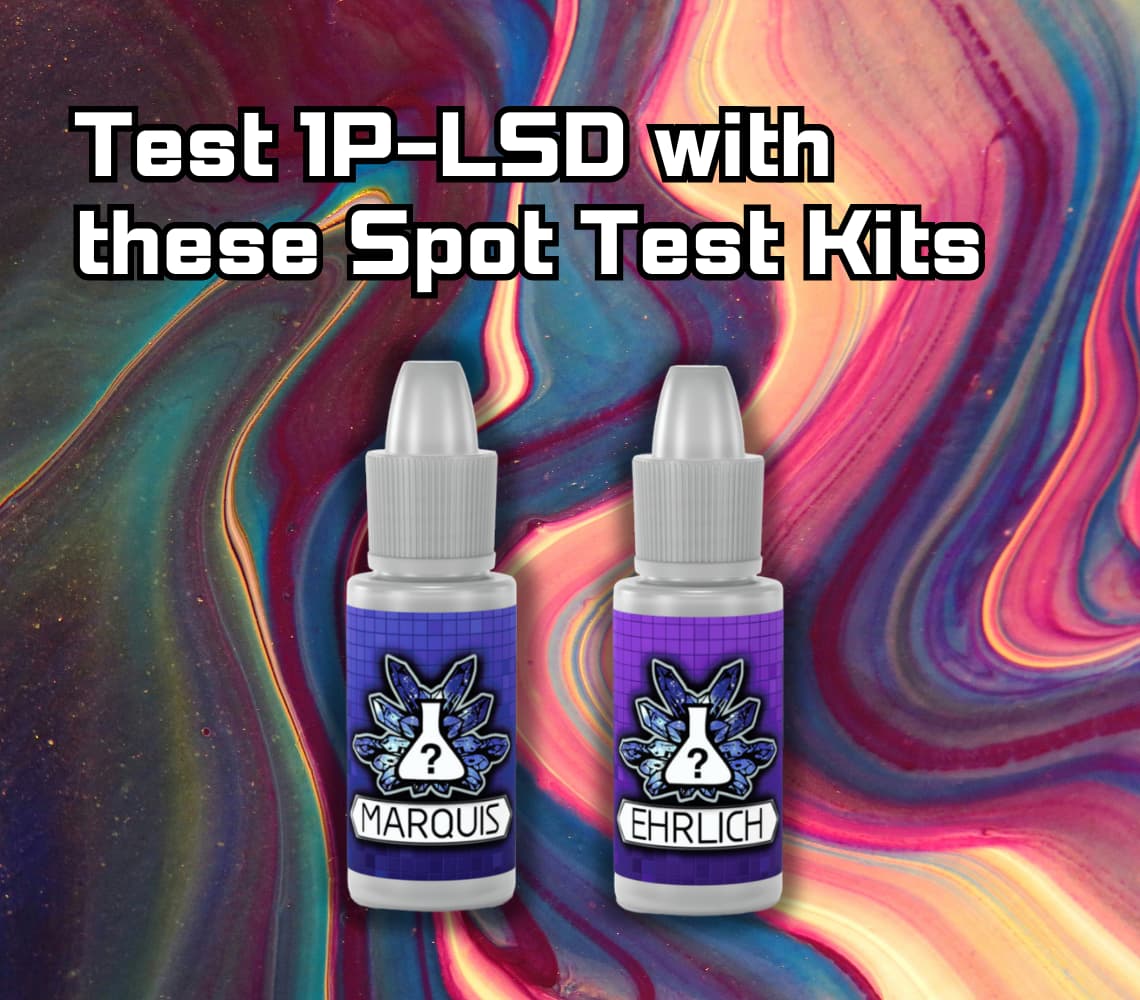
Marquis Single Spot Kit 50-100 tests per kit - $20 → LSD Spot Kit Package - Ehrlich + Hofmann reagents 50-100 tests per kit - $35 →
What If Your Test Shows Unexpected Results?
If your reagent test shows reactions that don't match the table above, here's what to do:⚠️ Bright/Vivid Colors with Marquis = Danger
If Marquis turns bright yellow, green, or orange instantly, this likely indicates an NBOMe or DOx compound—NOT LSD or any analog. These substances are significantly more dangerous and have caused numerous overdoses and deaths. Do not consume.
✓ No Reaction on All Tests
If you get no reaction on Ehrlich, Hofmann, AND Marquis (within 1 minute), you likely have 1cP-LSD or another newer analog. Wait 5-10 minutes to see if Ehrlich/Hofmann eventually turn pink/purple, indicating it's converting to LSD.
❌ Mixed Reactions
If you get conflicting results (e.g., Ehrlich reacts but Marquis shows bright colors), your tab may contain multiple substances or be adulterated. This is a red flag—discard the sample.
Common Questions About Testing LSD Analogs
Can I use the same test kit for LSD, 1P-LSD, and 1cP-LSD?
Yes! Our LSD Spot Kit Package (Ehrlich + Hofmann) works for all LSD variants. The key difference is timing—analogs need 5-10 minutes to hydrolyze and show reactions, while LSD-25 reacts instantly.How can I tell the difference between 1P-LSD and 1cP-LSD?
With basic reagent testing, you can't definitively distinguish between 1P-LSD and 1cP-LSD. Both will show no immediate reaction but will hydrolyze into LSD over time. The Marquis test can help: 1P-LSD turns soft reddish/purple with Marquis, while 1cP-LSD shows no Marquis reaction. For absolute certainty, laboratory GC-MS testing is required.Will my test kit expire?
Reagents typically last 12-18 months when stored properly (cool, dark place). Glass bottles last longer than plastic. If your reagent changes color in the bottle or doesn't react to known substances, it's time to replace it.How much of my tab will testing destroy?
Testing uses a tiny corner of your blotter—about 1-2mm². This represents less than 5% of a standard tab and won't significantly affect your dose. The safety benefit far outweighs this minimal loss.What about gel tabs or liquid LSD analogs?
The same Ehrlich + Hofmann test works for gel tabs and liquid drops. For liquids, place one drop on a white ceramic plate, add reagent, and observe. Gel tabs can be tested by cutting a small piece (1-2mm) and following standard procedure.Test Before You Trip
Don't risk taking NBOMes or unknown research chemicals. Our LSD Spot Kit Package identifies LSD, 1P-LSD, 1cP-LSD, and dangerous adulterants in minutes.
Get LSD Test Kit - $3550-100 tests per kit | Free shipping over $75 | Ships within 24 hours
Learn More About LSD Testing
- Complete Guide: How to Test LSD
- All About Gel Tabs, Blotter & Liquid LSD
- Legal Acid 2.0: How LSD Prodrugs Became a New RC Frontier - Comprehensive guide covering ALD-52, 1V-LSD, 1B-LSD, 1D-LSD, and the evolving legal landscape
- Ehrlich Reagent Color Guide
- Hofmann Reagent Color Guide
- Reaction Video Library 1P-LSD - Watch real test results
DISCLAIMER
A sample that has been tested should not be considered safe. There is inherent risk when choosing to consume any substance. Many factors are involved when conducting a test and examining reactions, and The Bunk Police does not assume responsibility for the interpretation of results. Reactions of individual samples can vary depending on lighting differences and the specific mixtures of substances being tested. Bunk Police kits are intended for identifying unknown substances for harm reduction purposes only.The Bunk Police does not assume responsibility for the use or misuse of this information. Proceed at your own risk.