The Label Isn’t Enough: Why Legal Cannabis Testing Is Failing Consumers
Think Legal Cannabis Is Always Tested and Safe? Think Again.
⚠️ Dispensary Labels Are Only as Reliable as the Labs Behind Them
A New York state lab just got caught falsifying safety results for mold and heavy metals. Independent testing puts verification back in your hands.
You bought your cannabis from a licensed dispensary. It came in a sealed package with a label, a strain name, a THC percentage, and somewhere behind the scenes, a certificate of analysis (COA) from a state-licensed testing lab. Everything looks legit.
But in late February 2026, the New York Office of Cannabis Management (OCM) issued a precautionary recall covering 55 product lots—flower, pre-rolls, concentrates, edibles, and beverages—after discovering that a state-licensed lab had been issuing unreliable results. The lab, Keystone State Testing New York, falsely reported passing results for Aspergillus (a disease-causing mold) and incorrectly reported levels of cadmium (a toxic heavy metal).
Products that should have failed safety testing made it onto dispensary shelves instead.
No adverse health effects have been reported, but the scope of the recall—affecting products from nearly two dozen licensed producers—makes one thing clear: the label is a starting point, not a guarantee.
What Went Wrong in New York
Between December 2025 and January 2026, OCM conducted inspections and a records audit of Keystone State Testing New York. Here's what they found:
| Finding | Details |
|---|---|
| Aspergillus (mold) | 54 product lots had results falsely reported as passing |
| Cadmium (heavy metal) | 1 additional product lot had levels reported incorrectly |
| Products affected | Flower, pre-rolls, concentrates, edibles, and beverages |
| Producers impacted | Nearly two dozen licensed companies |
| Adverse health reports | None reported at the time of recall |
Certificates of analysis (COAs) are the documents that tell consumers what's in their product and whether it passed safety screening. They're supposed to be the backbone of cannabis product safety. When those documents contain inaccurate data, consumers lose the ability to make informed decisions about what they're putting into their bodies.
OCM's Executive Deputy Director of Licensing, Compliance, and Laboratories put it plainly: when test results are inaccurate or unclear, consumer safety cannot be guaranteed.
Bought Any of the Recalled Products?
If you purchased cannabis from a New York dispensary and want to check if your product is affected, OCM has posted a full list of recalled lots. Unused recalled products can be returned to the dispensary of purchase.
This Isn't Just a New York Problem
If this were an isolated incident, it would be worth noting and moving on. It's not. Unreliable cannabis lab testing has been a recurring issue across the country.
Michigan — Viridis Labs (2025): The state revoked the licenses of Viridis Labs after an investigation revealed systemic underreporting of contamination. Data showed the lab reported Aspergillus failures at a rate 89% lower than competing labs. Michigan permanently banned the lab's owners from the industry and is now building a state-run reference lab to audit private testing facilities.
Oklahoma (2025): Greenleaf Labs was suspended after regulators found unreliable safety results, triggering a product recall.
California (2024): Multiple enforcement actions against labs inflating THC potency numbers—including the BelCosta enforcement action—exposed how widespread potency fraud had become.
⚠️ The Structural Problem
Cannabis testing labs are private, for-profit businesses. The companies whose products they test are also their paying customers. That creates a built-in incentive to deliver favorable results—higher THC numbers, fewer failed batches—because labs that consistently pass products tend to attract more business. This dynamic, sometimes called "lab shopping," has been documented across multiple states.
Regulators are catching up. Several states have launched or funded state-run reference laboratories that audit private lab results. But the gap between where oversight is and where it needs to be remains wide.
Why the Label Alone Isn't Enough
To be clear: legal cannabis is significantly safer than unregulated cannabis. Licensed markets have testing requirements, product tracking systems, and recall mechanisms that don't exist in the illicit market. The New York recall itself is proof that the regulatory system can work—OCM identified the problem, investigated, and acted.
But "safer" doesn't mean "infallible." Lab testing is only as reliable as the labs performing it. COAs are valuable tools—we've written a full guide on how to read them—but they reflect the output of a system that still has real gaps in oversight and accountability.
For consumers, that means the label is your first layer of protection. It shouldn't be your only one.
💡 Want to Learn How to Read a COA? Understanding certificates of analysis helps you make smarter decisions at the dispensary. Our guide walks through cannabinoid profiles, terpenes, contaminant testing, and what to look for. Read: How to Read a Cannabis Certificate of Analysis →
How to Verify Your Cannabis Independently
The good news: you don't have to rely entirely on the commercial testing system. Independent testing tools exist that put verification directly in your hands.
Option 1: At-Home Potency Testing
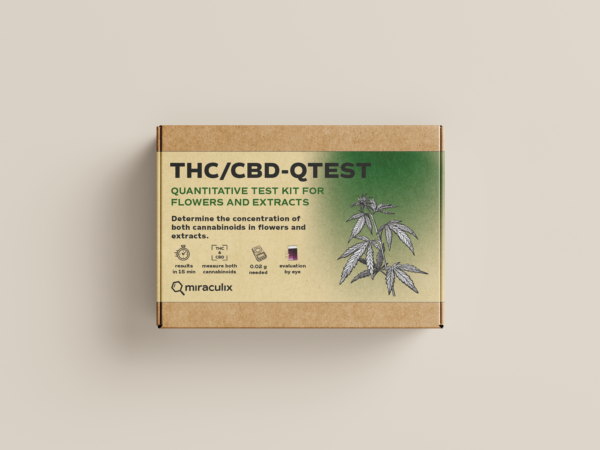
The Cannabis QTest Kit from Bunk Police is a single-use at-home test that separately determines the percentage of both THC and CBD in your cannabis.
It won't screen for contaminants like mold or heavy metals, but it gives you an independent read on potency—one of the most commonly manipulated data points in commercial cannabis testing. If a dispensary label says 28% THC and your QTest says 18%, that's information worth having.
Option 2: Full Mail-In Lab Analysis
For a comprehensive breakdown of your cannabis, Transparency Testing offers full mail-in lab analysis using FTIR, LC-MS, NMR, and NIR technologies.
This service goes well beyond what a dispensary COA typically covers. If you want lab-grade confidence in your cannabis without relying on the same system that just got caught falsifying results in New York, this is the most thorough option available.
Compare Your Testing Options
| Feature | Cannabis QTest Kit | Transparency Testing (Mail-In Lab) |
|---|---|---|
| What it tests | THC and CBD potency | Full chemical profile |
| Contaminant screening | No | Yes |
| Turnaround time | Minutes (at home) | Varies |
| Best for | Quick potency verification | Complete analysis and peace of mind |
| Format | Single-use kit | Mail-in sample |
⚠️ Remember: No test can guarantee a substance is completely safe. These tools provide critical information that helps you make more informed decisions—and in a market where commercial lab results have proven unreliable, that information matters.
Frequently Asked Questions
Is legal dispensary cannabis safe?
Legal cannabis is significantly safer than unregulated cannabis, thanks to state testing requirements, packaging standards, and recall systems. However, as the New York recall demonstrates, the system isn't perfect. Labs can and do produce unreliable results. Buying from a licensed dispensary is still the best option, but understanding that the testing system has gaps empowers you to take additional steps when you want more certainty.
What is a certificate of analysis (COA)?
A COA is a document produced by a testing lab that details the safety and potency results for a specific cannabis product. It typically includes cannabinoid potency (THC, CBD), terpene profiles, and contaminant testing for things like pesticides, heavy metals, mold, and residual solvents. We've written a complete guide to reading and understanding COAs—check it out here.
How common is cannabis lab fraud?
More common than most consumers realize. Labs in Michigan, Oklahoma, California, and now New York have faced enforcement actions for unreliable results. The problem is structural: labs are paid by the companies whose products they test, which creates financial pressure to deliver favorable results. Industry observers and investigative reports have documented this pattern across multiple states over multiple years.
Should I be worried about the products I already consumed?
OCM has stated that no adverse health effects have been reported in connection with the recalled products. For most healthy individuals, occasional exposure to low levels of Aspergillus or cadmium is unlikely to cause acute harm. The recall is precautionary, and the risk is primarily associated with repeated or chronic exposure—which is exactly what the testing system is supposed to prevent.
Can I test my cannabis for mold or heavy metals at home?
At-home reagent kits and potency tests like the Cannabis QTest Kit are designed for potency verification, not contaminant screening. To test for mold, heavy metals, pesticides, or other contaminants, you'll need a full lab analysis. Transparency Testing offers mail-in lab services that include comprehensive contaminant screening.
What should I do if I have one of the recalled New York products?
If you purchased any of the affected product lots, you can return unused products to the dispensary where you bought them. The full list of recalled products is available at cannabis.ny.gov/current-recalls. If you experience any health symptoms you believe are related to a cannabis product, contact your healthcare provider or the Poison Center at (800) 222-1222.
Related Resources
- How to Read a Cannabis Certificate of Analysis (COA) — Understand what's on the label and what to look for
- How to Test Cannabis — Complete guide to cannabis testing methods and kits
- Cannabis QTest Kit — At-home THC and CBD potency testing
- Transparency Testing Lab Services — Full mail-in chemical analysis
- Our Types of Test Kits — Understanding spot kits, separation kits, and purity tests
- QTest Purity Test Kit Basics — How potency testing works
- New York OCM Current Recalls — Official recall information
Stop Guessing. Start Testing.
Dispensary labels are only as reliable as the labs behind them. Verify your cannabis independently with at-home potency testing or full lab analysis.
Free shipping on orders over $75 | Discreet packaging
The Bottom Line
Legal cannabis testing is a good system with real problems. The New York recall is a reminder that regulation, while essential, doesn't guarantee accuracy at every step. Labs can and do produce unreliable results, and the consequences fall on consumers who trusted the label.
None of this means you should stop buying from dispensaries. It means you should stay informed, ask questions, learn to read COAs critically, and know that independent testing options are available when you want a second opinion.
Stay safe. Stay informed. Test your cannabis.
Sources
- Ganjapreneur — Unreliable Lab Results Prompt New York Adult-Use Cannabis Recall
- CBS6 Albany — OCM Issues Precautionary Recall
- MJBizDaily — New York Recalls Cannabis Products
- New York OCM — Current Recalls
- Blunt Talkzz — The Viridis Fallout
- MJBizDaily — State Cannabis Regulators Still One Step Behind